L'Opinionista: The vibrations of feeling in the fairytale and dreamy landscapes of Sandro Frinolli Puzzilli
The vibrations of feeling in the fairytale and dreamy landscapes of Sandro Frinolli Puzzilli
By Marta Lock -19 February 202 141
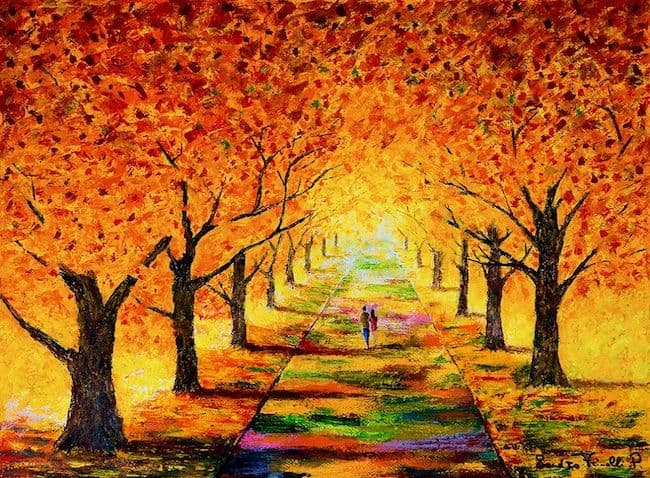
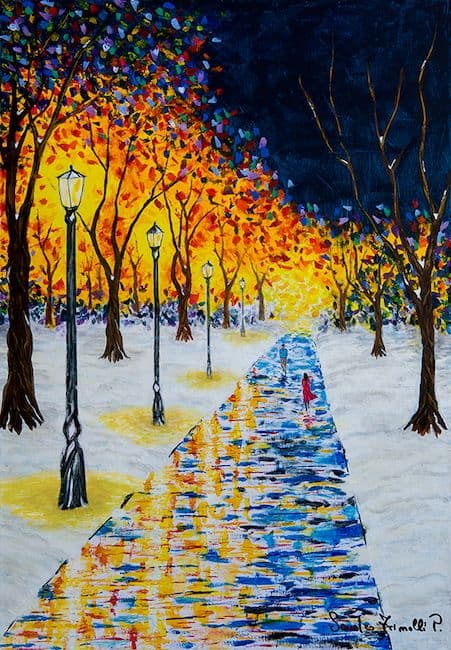
Autumn lights
In the multifaceted and varied contemporary artistic panorama, in which the figurative or conceptual link with the folds of existence seems to be an essential imperative from the creative act, there is perhaps a smaller category of artists who choose to strive towards an idyllic, ideal dimension interior of which to take refuge. Today's protagonist chooses to tell landscapes immersed in a non-time to interpret his approach to life.
When towards the end of the nineteenth century many French artists decided to regain the pleasure of painting en plein air, narrating nature but also the pleasant moments of leisure of the bourgeoisie of the time, they also experienced the pleasure of the immediacy of a fast, impromptu painting , without the need to stick to a drawing but relying on the pure and simple combination of colors that were no longer mixed on a palette and spread evenly on the canvas. To give the sense of dynamism and movement essential for those artists, a different approach became necessary, a pictorial gesture through which each single color had to be affixed individually because it would have been the combination with the other small touches to generate the overall vision of the eyes of the beholder. That group of painters gave birth to one of the most important currents of the early modern era, I am obviously speaking of Impressionism, which in some way still remained strongly linked to the canons of beauty that the painting of previous eras had taken as guidelines; somehow the shades of Renoir's and Monet's landscapes, although permeated by the emotional world of the master painters of the canvases, still conformed to the observed reality, to the colors closest to the natural ones, those existing and perceptible by the eye. However, their intuition on the decomposition of images into small fragments formed the basis of many movements of the early twentieth century which, through the enlargement and the geometricization of those chromatic pieces, completed that detachment from traditionally understood art that characterized the entire first part of the century. Futurism, Cubism, Geometric Abstractionism, Abstract Expressionism but also the evolution of photography were all derivations from that intuition of chromatic subdivision that began with Impressionism. The Roman artist Sandro Frinolli Puzzilli starts precisely from photography to start his expressive path, then allowing himself to evolve, passing first to Digital Art and then arriving at painting, not without having internalized and absorbed the previous experiences in order to transform the current works into manifestation of one's feeling, of that whirlwind of emotions that are often perceived from within but not fully focused by the mind.
1 Lonely Souls
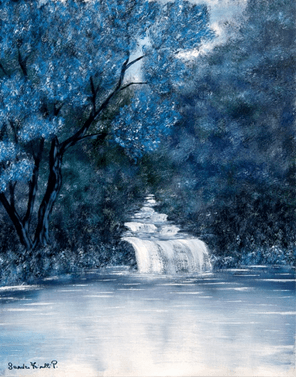
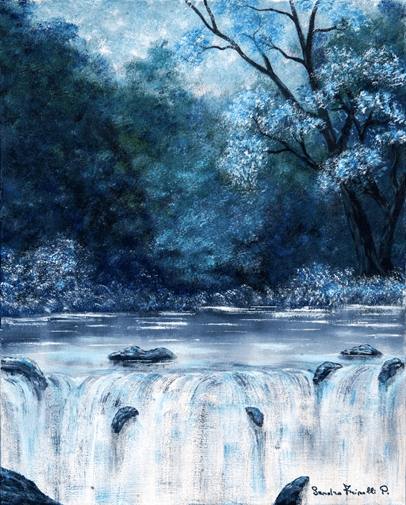
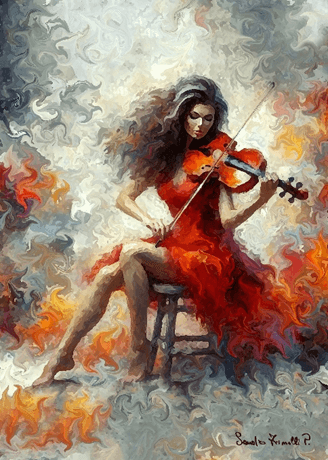
Hence, the chosen shades become unreal, closer to Expressionism, Frinolli Puzzilli's unarguable need to tune chromatism to his own inner and intimate world, aware that if he were to follow more traditional rules and schemes he would perceive a feeling of limitation of freedom of communication. At the same time, however, he maintains a brushstroke, or in some works it would be better to say spatula because he also uses this second type of color spreading technique, short, rapid, single according to the impressionist teaching absolutely in accordance with his fragmented expressive intention as are the facets of human emotions.
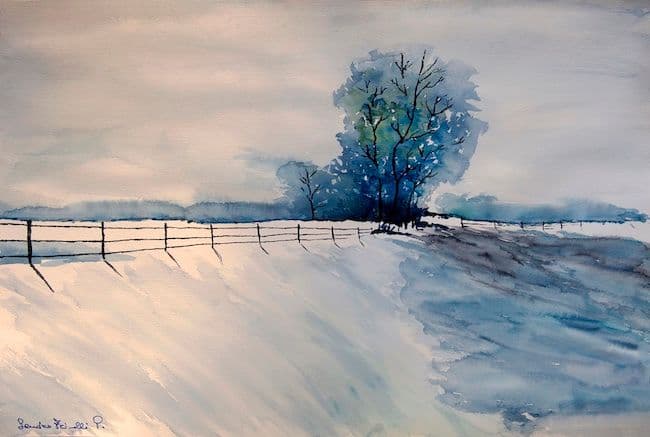
2 Winter morning
As fundamental as it is his immersion in nature that becomes a place not a place, an ideal place to entrust the emotional casket that guides the pictorial act on the basis of the feeling of the moment, able to transform what is visible into what is perceptible from the inside.
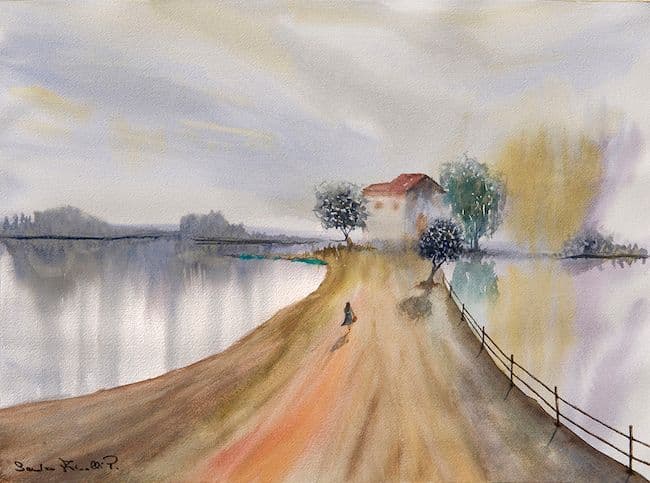
3 Towards home
The presence of man is barely hinted at, as if the nature that surrounds him induced him to lose himself, abandon himself, in the intensity of those places that seem to lead into a fantastic world where every sensation is amplified but at the same time protected, right in virtue of that timeless and spaceless dimension in which Frinolli Puzzilli's narrative rhythm leads the observer but also, and above all, himself in the very moment in which he places himself in front of the canvas.
4 Unexpected encounter
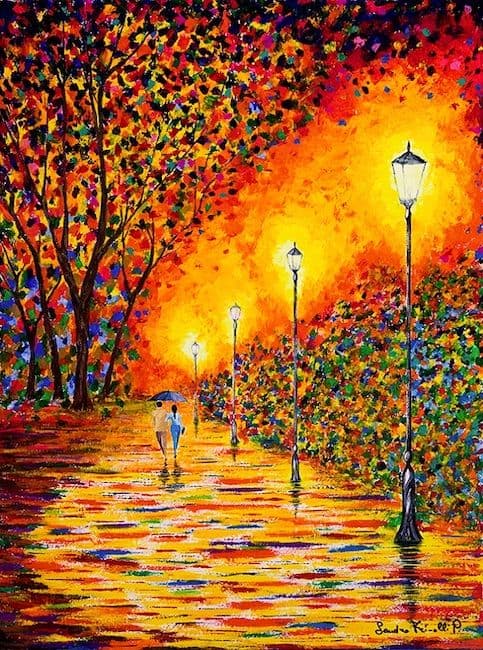
In the work Unexpected meeting the foliage of the trees that are reflected on the pavement are the absolute protagonists of the canvas, as well as the street lamps soar to illuminate the environment while the man and woman are small, almost invisible, protected by the landscape but also lost in it, almost as if destiny had put itself in a listening position, of observation of what the unsuspecting protagonists will soon experience. The small touches that the artist uses to define the trees and the road are chosen in expressionist shades, to emphasize the destiny solemnity of what is about to happen, giving the canvas a warm atmosphere despite the snow.
5 Fall in love in the rain
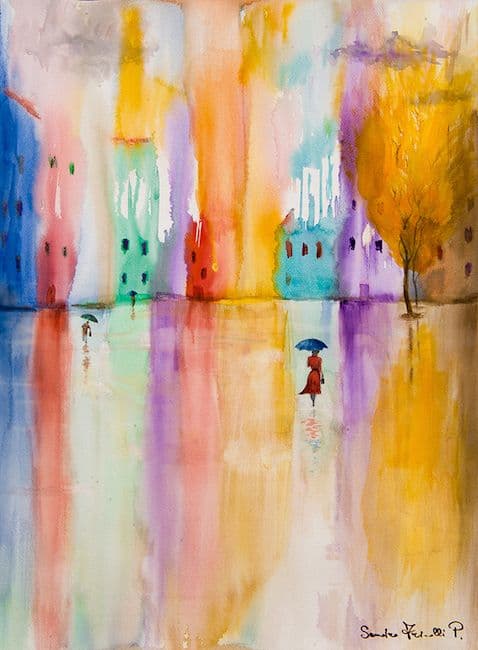
In the work Falling in love in the rain, on the other hand, the chromatic range is that of the most intense emotions, of passion, of a shared and enveloping feeling that cannot help but also spread to the surrounding environment; also in this case people are small but their sensations are so great that they spread in the woods, among the trees, on the ground because, Frinolli Puzzilli seems to say, it is precisely of that emotion that the human being is made and it is by virtue of it that everything takes on a special, unique aspect and relevance.
6 Alone again
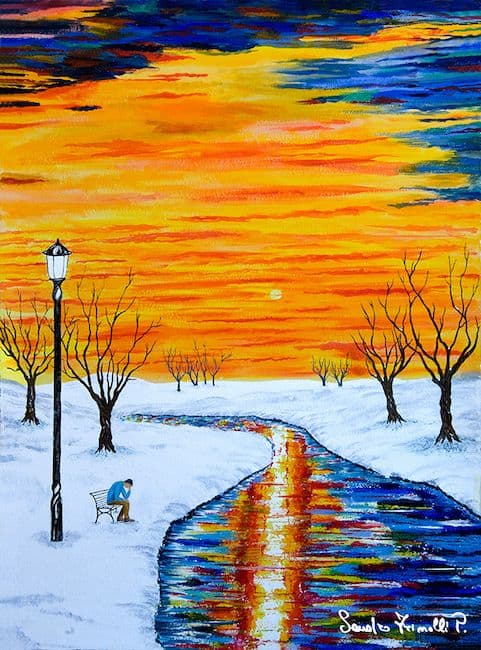
As much as in Alone again, the discouragement of the man sitting on the bench, that strong sense of unpleasant loneliness that emerges from his gestures, is transmitted to the outside, an outside that is no longer protective or enveloping but, on the contrary, seems to assist desolate to the discomfort of the protagonist of that sensation; sunset agrees with defeat for something he had hoped for but did not materialize, a dream from which, despite him, or because of his responsibility, he had to wake up, taking note of the events.
7 White tale
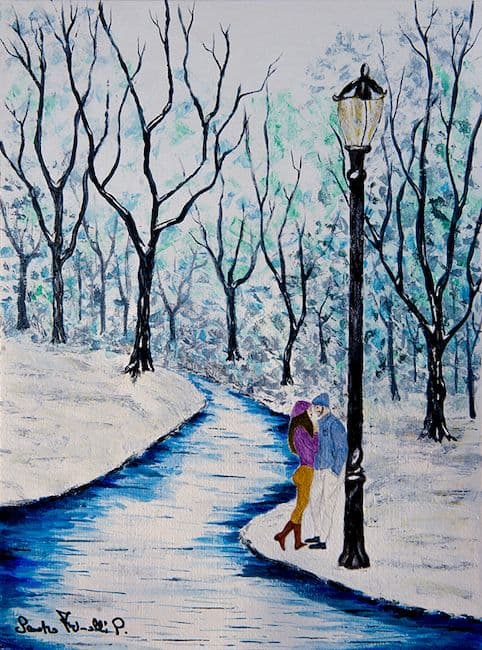
Nature, with its grandeur and majesty, therefore enters into harmony and synergy with the smallness of the human being who lives, suffers, rejoices and struggles within a world in which he is only a fleeting guest, while the views, the landscapes, the roads, the rivers and the woods remain immortal over time to witness the succession of lives, of stories, of different protagonists every time.
Sandro Frinolli Puzzilli has exhibited his works in the main cities of the world - Paris at the Louvre Museum, in London, Moscow, Abui Dhabi, Dubai, Barcelona, Madrid, Stockholm, Principality of Monaco, Brussels, Ithaca - and throughout the national territory .
Image gallery